Guide
-bg-primary-300
-bg-primary
-bg-primary-700
|
-bg-secondary-300
-bg-secondary
-bg-secondary-700
|
-bg-neutrals-300
-bg-neutrals
-bg-neutrals-700
|
-bg-accent-300
-bg-accent
-bg-accent-700
|
-bg-white
|
-bg-black
|
-title
|
The quick fox jumped over the lazy dog |
-h1
|
The quick fox jumped over the lazy dog |
-h2
|
The quick fox jumped over the lazy dog |
-h3
|
The quick fox jumped over the lazy dog |
-sub-h1
|
The quick fox jumped over the lazy dog |
-sub-h2
|
The quick fox jumped over the lazy dog |
-sub-h3
|
The quick fox jumped over the lazy dog |
-text-lg
|
The quick fox jumped over the lazy dog |
-text-lg
|
The quick fox jumped over the lazy dog |
-text-lg
|
The quick fox jumped over the lazy dog |
-text-lg
|
The quick fox jumped over the lazy dog |
-text-base
|
The quick fox jumped over the lazy dog |
-text-base
|
The quick fox jumped over the lazy dog |
-text-base
|
The quick fox jumped over the lazy dog |
-text-base
|
The quick fox jumped over the lazy dog |
-text-base -serif
|
The quick fox jumped over the lazy dog |
-text-base -serif
|
The quick fox jumped over the lazy dog |
-text-base -serif
|
The quick fox jumped over the lazy dog |
-text-base -serif
|
The quick fox jumped over the lazy dog |
-text-sm
|
The quick fox jumped over the lazy dog |
-text-sm
|
The quick fox jumped over the lazy dog |
-text-sm
|
The quick fox jumped over the lazy dog |
-text-sm
|
The quick fox jumped over the lazy dog |
-text-xs
|
The quick fox jumped over the lazy dog |
-text-xs
|
The quick fox jumped over the lazy dog |
-text-xs
|
The quick fox jumped over the lazy dog |
-text-xs
|
The quick fox jumped over the lazy dog |
-meta
|
The quick fox jumped over the lazy dog |
Models
Document [🔗]
$document = js()->documents()->get(get_the_id())Button
CTA Group
Heading
Next Steps for AI Welfare Research

NYU Environmental Law Journal Symposium

Introducing the Digital Consciousness Model, with Rethink Priorities
The Moral Status of Bugs, Bots, and Other Beings

The Moral Circle

Animals and the Constitution, with John Adenitire and Raffael Fasel
CTA Item
Heading
Hero
Navigation
Person

I am currently Associate Professor of Environmental Studies, Affiliated Professor of Bioethics, Medical Ethics, Philosophy, and Law, Director of the Center for Environmental and Animal Protection, Director of the Center for Mind, Ethics, and Policy, and Co-Director of the Wild Animal Welfare Program at New York University. I am also a Faculty Fellow at the Guarini Center on Environmental, Energy & Land Use Law at the NYU School of Law and an Advisor at the Animals in Context series at NYU Press, and I was Director of the NYU Animal Studies M.A. Program from 2018-2024.
Program from 2018-2024. I am currently Associate Professor of Environmental Studies, Affiliated Professor of Bioethics, Medical Ethics, Philosophy, and Law, Director of the Center for Environmental and Animal Protection, Director of the Center for Mind, Ethics, and Policy, and Co-Director of the Wild Animal Welfare Program at New York University. I am also a Faculty Fellow at the Guarini Center on Environmental, Energy & Land Use Law at the NYU School of Law and an Advisor at the Animals in Context series at NYU Press, and I was Director of the NYU Animal Studies M.A. Program from 2018-2024.
I am currently Associate Professor of Environmental Studies, Affiliated Professor of Bioethics, Medical Ethics, Philosophy, and Law, Director of the Center for Environmental and Animal Protection, Director of the Center for Mind, Ethics, and Policy, and Co-Director of the Wild Animal Welfare Program at New York University. I am also a Faculty Fellow at the Guarini Center on Environmental, Energy & Land Use Law at the NYU School of Law and an Advisor at the Animals in Context series at NYU Press, and I was Director of the NYU Animal Studies M.A.
Program from 2018-2024. I am currently Associate Professor of Environmental Studies, Affiliated Professor of Bioethics, Medical Ethics, Philosophy, and Law, Director of the Center for Environmental and Animal Protection, Director of the Center for Mind, Ethics, and Policy, and Co-Director of the Wild Animal Welfare Program at New York University. I am also a Faculty Fellow at the Guarini Center on Environmental, Energy & Land Use Law at the NYU School of Law and an Advisor at the Animals in Context series at NYU Press, and I was Director of the NYU Animal Studies M.A. Program from 2018-2024.
Focus Areas
Research Documents
Articles
How should we make decisions about beings whose sentience and moral status are uncertain? This chapter defends a probabilistic approach: we should distinguish scientific questions about sentience, ethical questions about moral status, and practical questions about what protections are feasible, then combine our confidence across these domains to guide proportionate action. This framework avoids both exclusionary approaches that demand excessive certainty and inclusionary approaches that risk ignoring costs and constraints. We illustrate its application to invertebrate animals and AI systems, address concerns about subjectivity and false precision, and argue that uncertainty should shape rather than prevent moral and policy responses.
AI systems increasingly shape decisions affecting nonhuman sentient beings or sentience candidates, yet alignment documents rarely address these issues explicitly. This policy brief proposes ethical, scientific, and practical commitments for incorporating animal and AI welfare into model specs, constitutions, and other alignment documents. It recommends proportionate consideration of sentient beings and sentience candidates, evidence-based reasoning about animal and AI sentience, and consistent treatment across cases. It also outlines two complementary implementation strategies: revising existing commitments and adding new commitments, supported by examples, testing, and iteration. The aim is to improve model behavior while preserving honesty, helpfulness, harmlessness, and safety.
AI systems are becoming more capable and widely deployed, raising questions about whether they can be welfare subjects with morally significant interests. This report offers guidance for studying AI welfare empirically. We start by discussing three dimensions along which research about this topic can vary: the question being asked (whether a system is a welfare subject, and what benefits or harms it if so), the entity being assessed (such as models, instances, and personas), and the kind of evidence being gathered (behavioral, internal, and developmental). Thinking clearly about these issues can help researchers target their experiments and interpret the results. We then apply these tools to consciousness, sentience, and three levels of agency, exploring promising methods and early findings for each. We close with principles for the field: AI welfare research should be probabilistic, pluralistic, thoughtfully targeted, ethically conducted, transparently reported, and informed by research independent of AI companies. The science is young, but rigorous empirical work is both possible and necessary.
The emerging interdisciplinary field of wild animal welfare science (WAWS) explicitly expands the study of welfare to animals in the wild. It has applied value in informing how to improve the welfare of wild animals, ensuring they can thrive as well as survive in the face of the challenges of the Anthropocene. It also has intellectual value by generating new knowledge and insights about the affective states of wildlife. We aim to help scientists and practitioners understand how WAWS can support their work. To facilitate engagement in the field, we articulate core principles and key characteristics, and explore opportunities and challenges. We encourage those with relevant interests to engage in the field’s development and application.
In this chapter I argue that we should extend moral consideration to a much wider range of beings than we currently do. There are at least two reasons why. The first reason is epistemic: We should be open to the possibility that a very wide range of beings have moral status, and we should extend at least some moral consideration to these beings accordingly. The second reason is practical: We now have the power to impact a very wide range of beings, both within and across species, nations, and generations. The upshot is that we should extend at least some moral consideration to quintillions of beings – including invertebrates, plants, and some artificial intelligences – with revisionary implications for many moral theories.
Research Hero

Research
Shortcuts
Tile
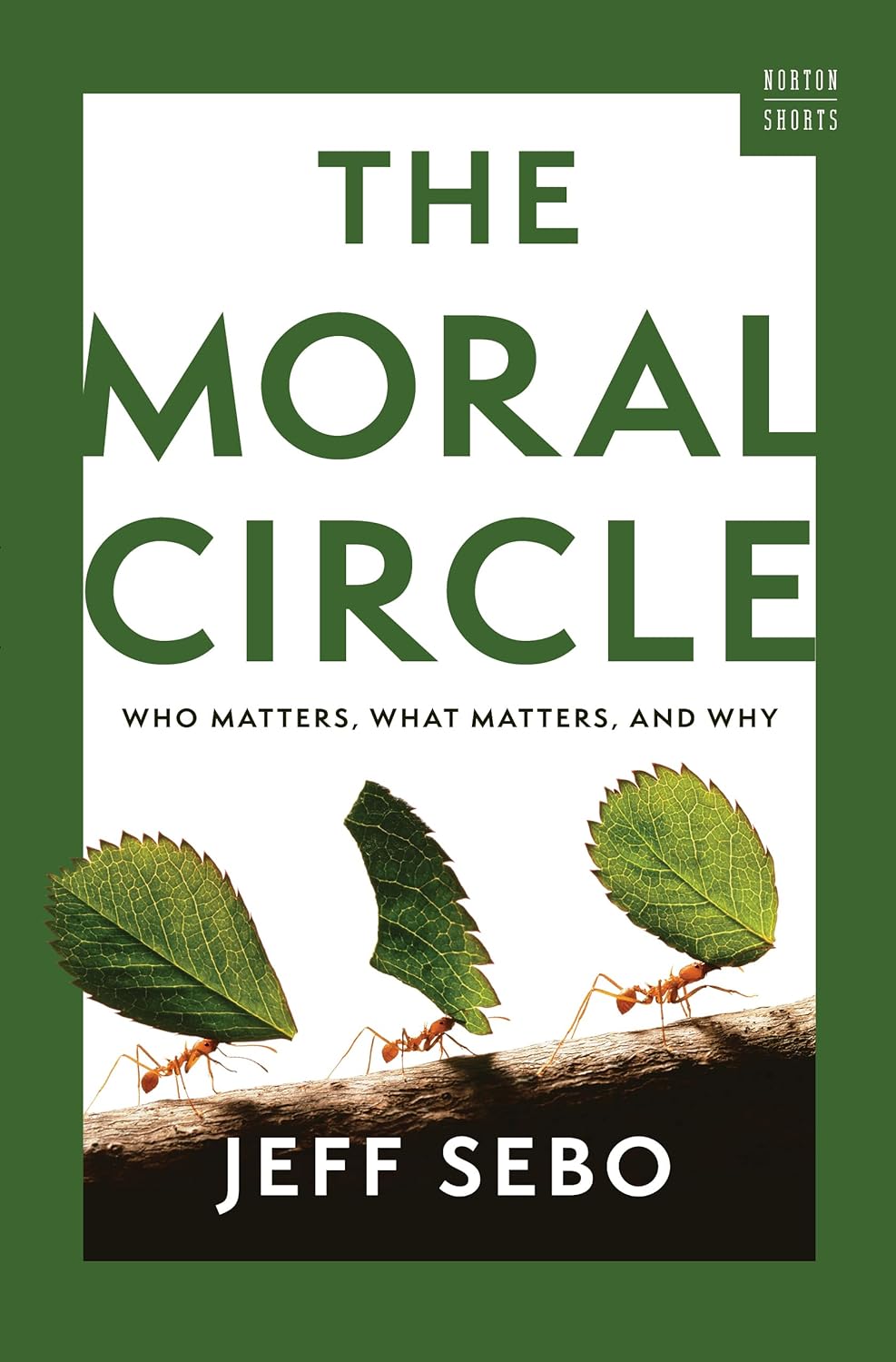
The Moral Circle
Who Matters, What Matters, and Why
In this book I argue that humanity should expand our moral circle — that is, our conception of which beings morally matter for their own sakes — much farther and faster than many philosophers assume, for two related reasons. First, we should be open to the possibility that a vast number of In this book I argue that humanity should expand our moral circle — that is, our conception of which beings morally matter for their own sakes — much farther and faster than many philosophers assume, for two related reasons. First, we should be open to the possibility that a vast number of.
Tiles
Books
The Moral Circle
Who Matters, What Matters, and Why
This book argues that humanity should expand our moral circle — that is, our conception of which beings morally matter for their own sakes — much farther and faster than many philosophers assume, for two related reasons. First, we should be open to the realistic possibility that a vast number of beings can be sentient or otherwise morally significant, including invertebrates and, eventually, AI systems, and we should extend at least some moral consideration to these beings accordingly. Second, we should be open to the realistic possibility that our actions can affect a vast number of beings, including beings who are far away in space and time, and we should extend at least some moral consideration to these beings accordingly as well. The upshot is that we should extend at least some moral consideration to septillions of beings, including and especially future nonhumans, with transformative implications for our lives and societies.
This book is available in print and audio.
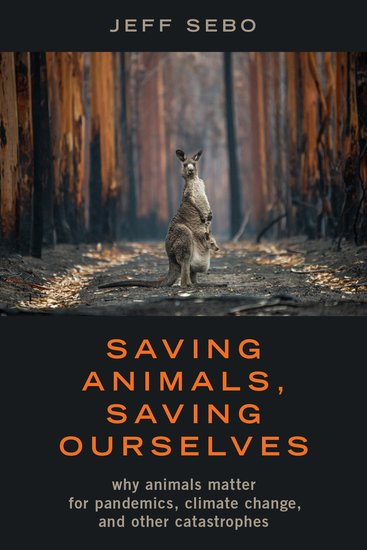
Saving Animals, Saving Ourselves
Why Animals Matter for Pandemics, Climate Change, and Other Catastrophes
This book argues that human and nonhuman fates are increasingly linked. Our use of animals contributes to pandemics, climate change, and other global threats which, in turn, contribute to biodiversity loss, ecosystem collapse, and nonhuman suffering. As a result, we have a moral responsibility to include animals in global health and environmental policy, by reducing our use of them as part of our pandemic and climate change mitigation efforts and increasing our support for them as part of our adaptation efforts. Applying and extending frameworks such as One Health and the Green New Deal, I call for reducing support for factory farming, deforestation, and the wildlife trade; increasing support for humane, healthful, and sustainable alternatives; and considering human and nonhuman needs holistically. I also consider connections with moral status, political status, creation ethics, population ethics, social services, infrastructure, and more.
This book is available in print and audio, and the print edition is available open access.
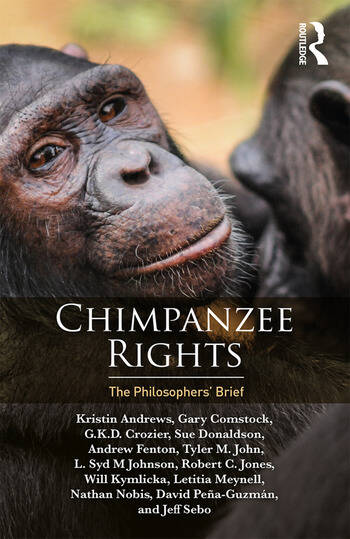
Chimpanzee Rights
The Philosophers’ Brief
This book makes the case for chimpanzee rights. Under current US law, one is either a ‘person’ with the capacity for legal rights, or a ‘thing’ without the capacity for legal rights. And currently, all nonhuman animals are classified as things. Focusing on two captive chimpanzees, Kiko and Tommy, we argue that this approach to legal status is unacceptable. We consider the four main conceptions of legal rights and personhood that US courts have affirmed: a species conception, a social contract conception, a community conception, and a capacities conception. We argue that the species conception fails, and that the other conceptions, plausibly interpreted, are compatible with chimpanzee legal personhood. We conclude that if we continue to classify every being as either a person or a thing, then we should classify chimpanzees as persons, not things. We close by considering future directions for animal rights.
This book is available in print.
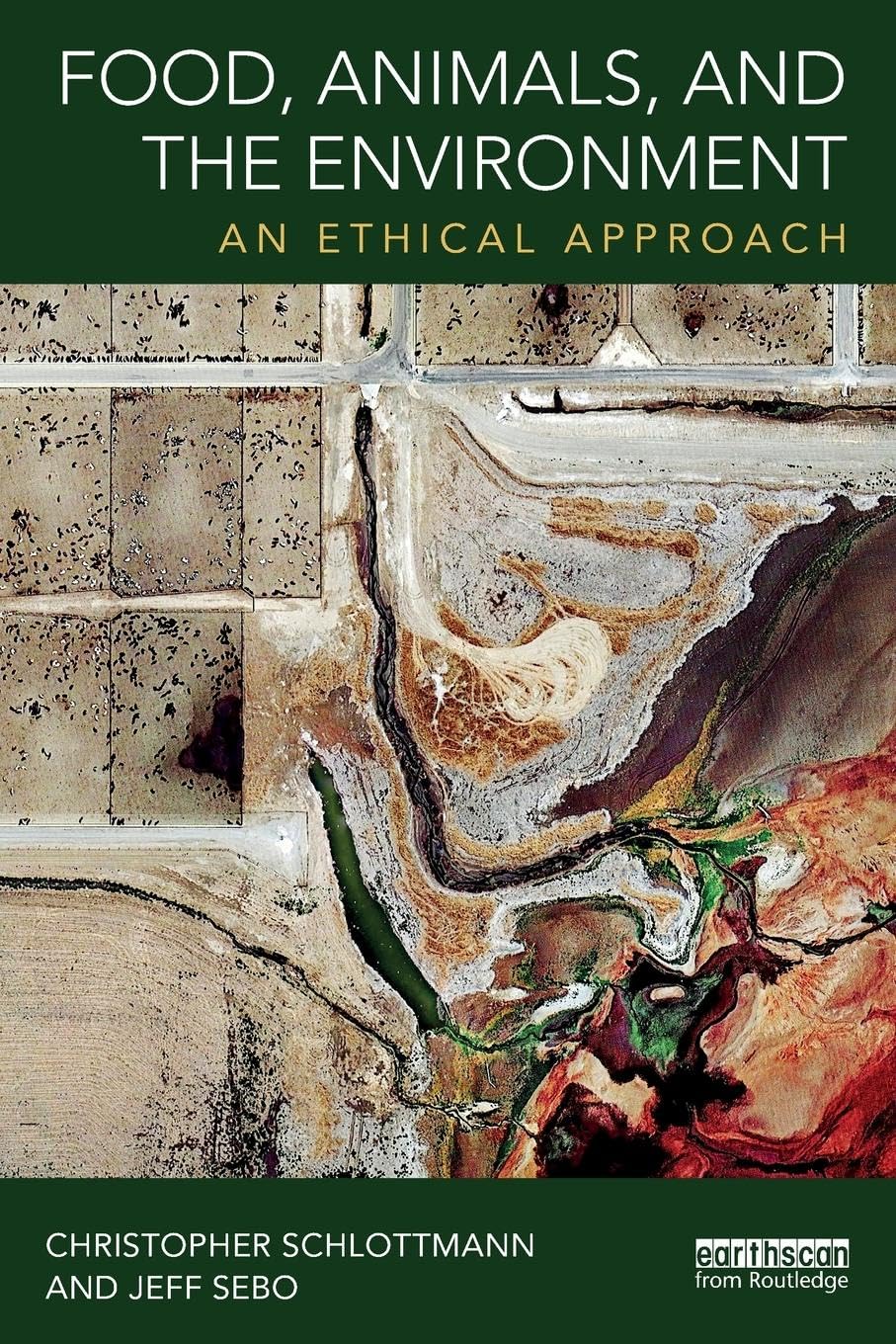
Food, Animals, and the Environment
An Ethical Approach
This book examines some of the main impacts that agriculture has on humans, nonhumans, and the environment, as well as some of the main questions that these impacts raise for the ethics of food production, consumption, and activism. Industrial animal agriculture is much more harmful than alternative food systems. It kills hundreds of billions of animals per year; consumes vast amounts of land, water, and energy; and produces vast amounts of waste, pollution, and greenhouse gas emissions. These impacts raise difficult ethical questions. What do we owe members of other species, nations, and generations? And what are the ethics of supporting and resisting unnecessarily harmful industries? The discussion ranges over topics such as effective altruism, abolition and regulation, revolution and reform, individual and structural change, single-issue and multi-issue activism, and legal and illegal activism.
This book is available in print.
Gallery